 ChicagoShadows
ChicagoShadows
ChicagoShadows
Build your family, run the rackets, and fight rival bosses for control of a living city that keeps moving day and night — right in your browser.
Free · No download · In the city in under a minute
Recruit gangsters, promote lieutenants, and field squads for the job.
Seize businesses block by block and light up the map in your family's colors.
Broker peace or burn it down — the last family standing wins the city.
ChicagoShadows runs on continuous time. Your territory, your treasury, and your reputation persist from the moment you arrive — and keep moving on a real clock while you sleep.
Energy and health regenerate, rackets pay out, and the world advances on a real-time tick — not a weekly turn. Log off Friday, come back Sunday, and the city moved without you. That's the point.
No weekly wipe. Every block you take, every alliance you sign, every enemy you make stays on the map. A city runs on until one boss takes the crown — and new cities are always opening, so there's a fresh Chicago whenever you want one.
Different cities run on different in-game clocks — some fast and furious, some slow and deliberate. You choose the experience you want: a weekend blitz or a weeks-long campaign. Money still flows in real time, faucets and sinks balanced so the streets stay worth fighting over.
Everything you see is the live game — not a mockup.
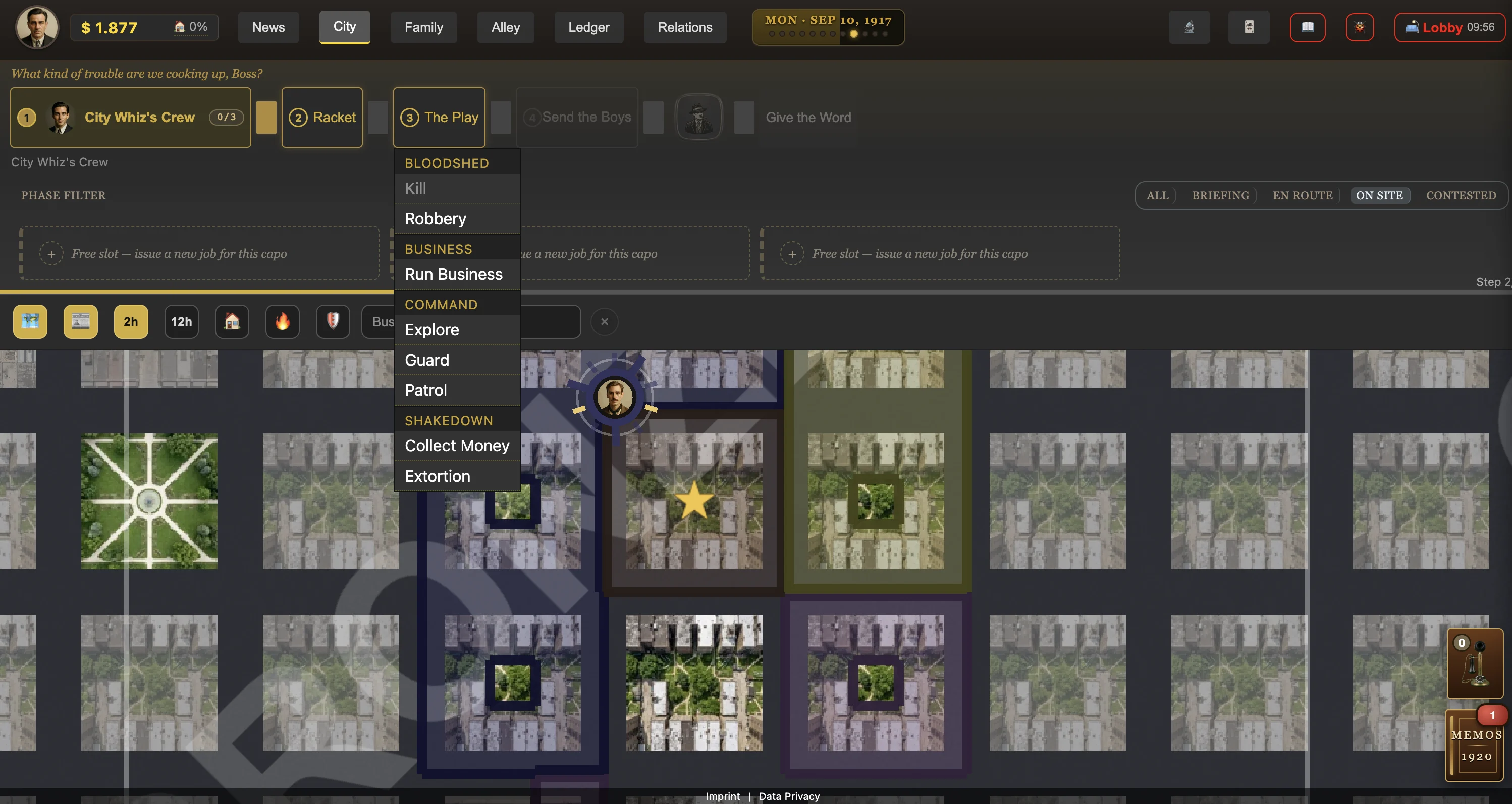
Scan a top-down strategic map of 1920s Chicago, block by block. Click any building to scout its owner, value, and stock. Territory lights up in your family's color as your empire grows — and stays lit until someone takes it from you.
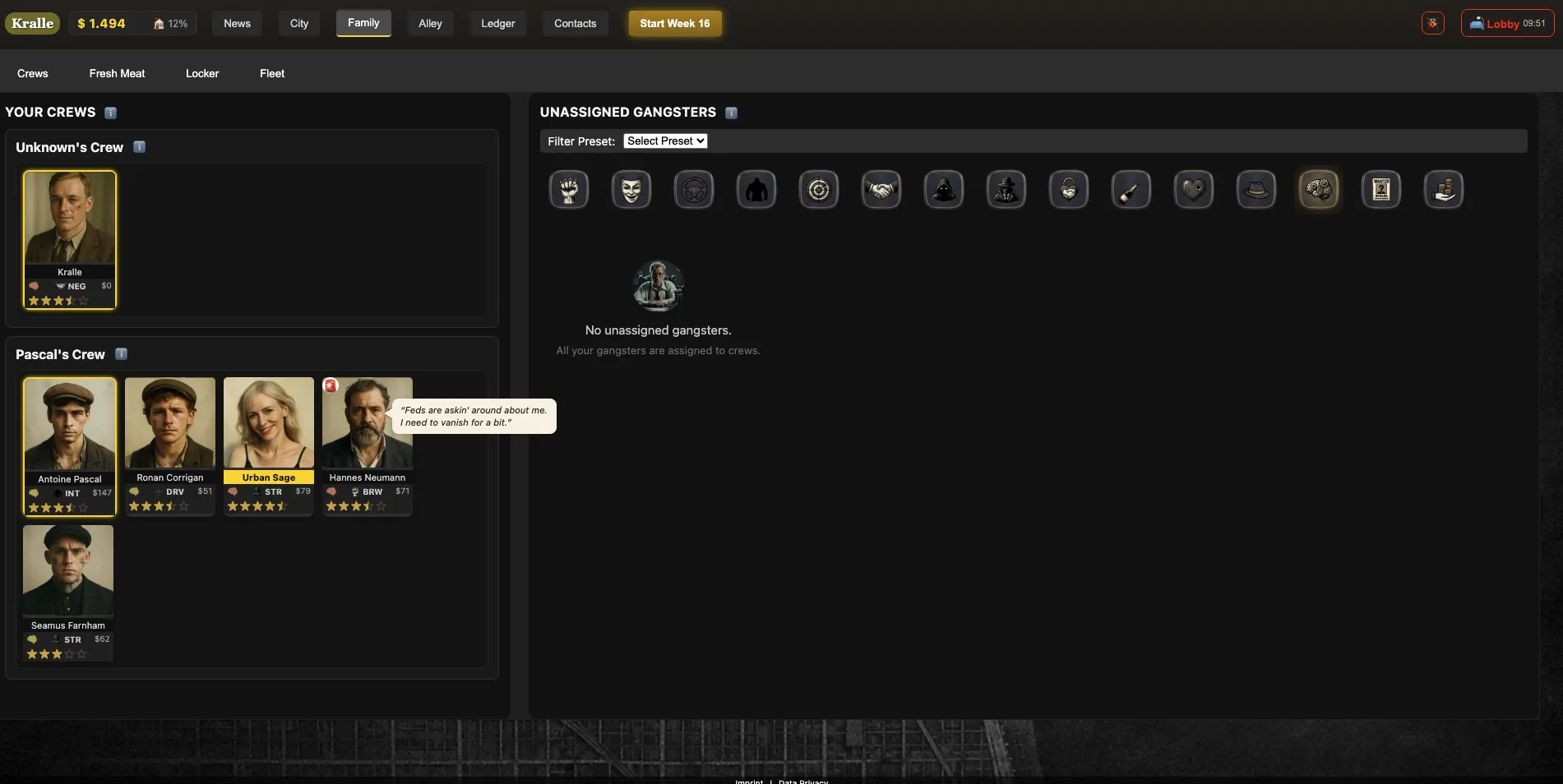
Drag-and-drop gangsters into squads led by your Capos. Filter by muscle, brains, or stealth to field the right crew for the job. Keep them paid and loyal — because in a world with no weekly reset, a betrayal you cause today is a war you fight next week.
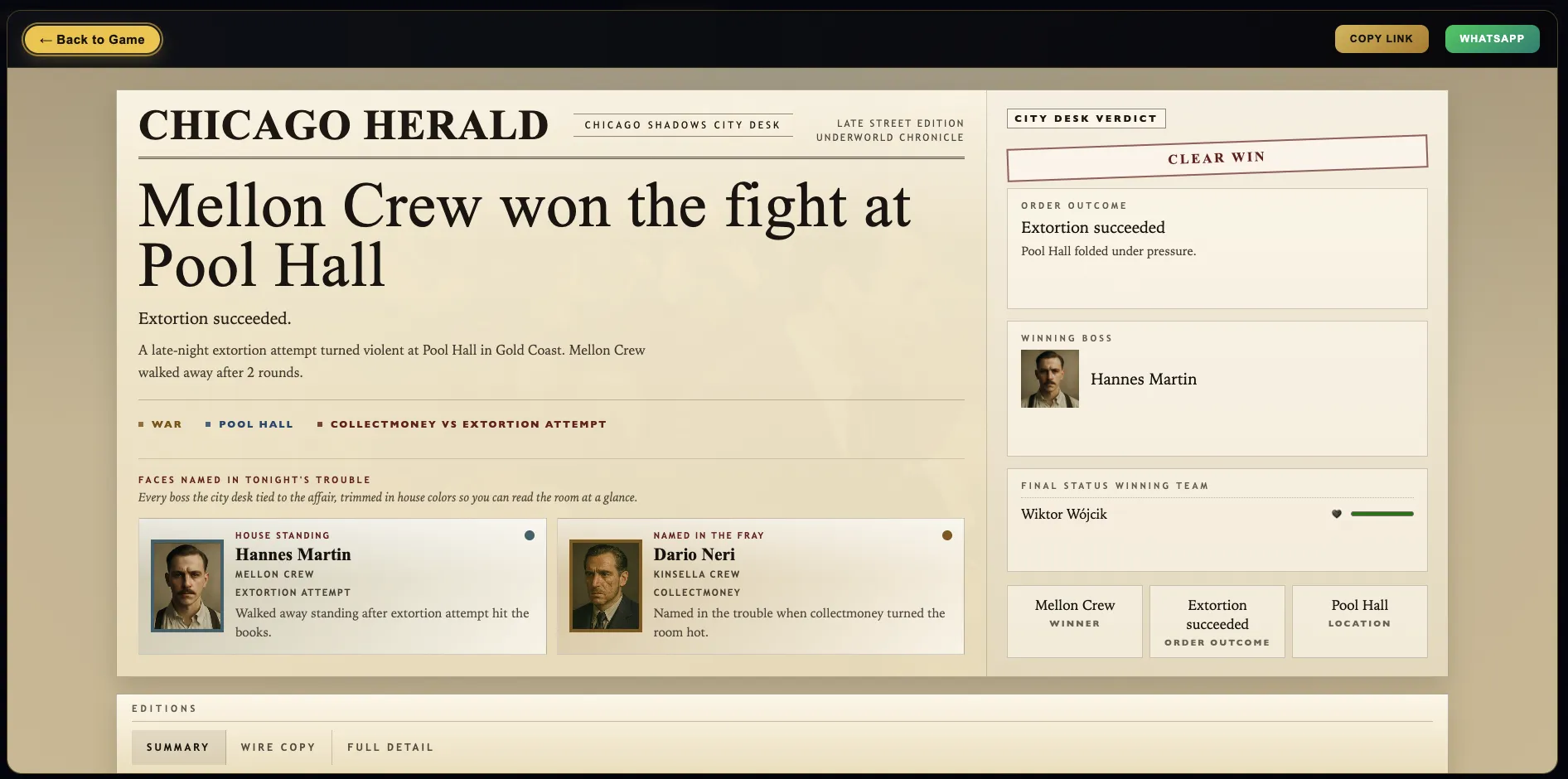
When crews clash, the city reacts in real time — and the Herald breaks down every blow: who attacked, who defended, which racket was at stake, and who walked away on top. Diplomacy happens on the street, in the moment — peace, neutral, or war is a choice you make and live with.
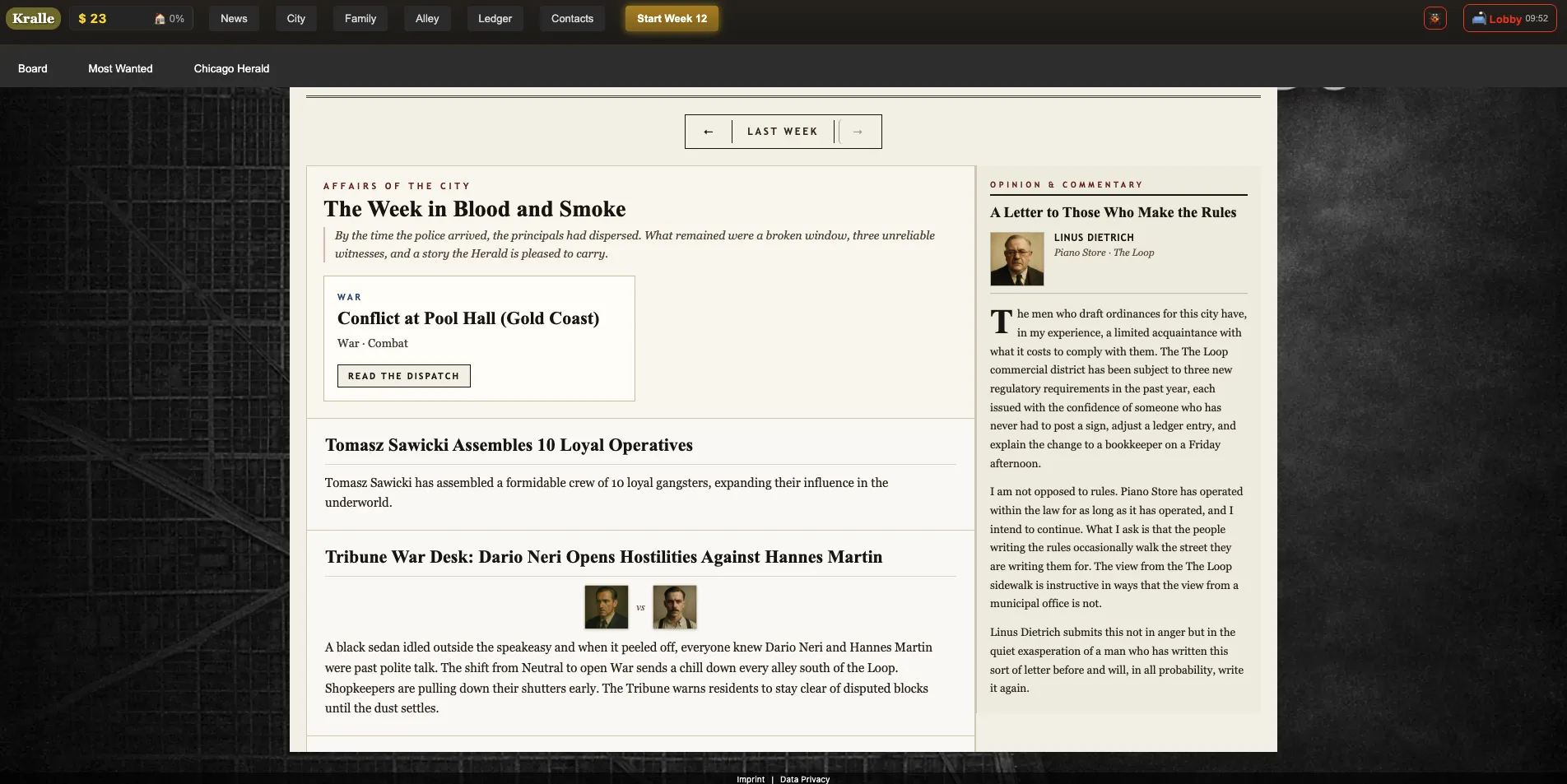
The Chicago Herald is the city's shared memory — gang wars, power shifts, milestones, and the week's Most Wanted, all in one front page everybody sees. It's how you find out who's rising, who's bleeding, and who's coming for you next.
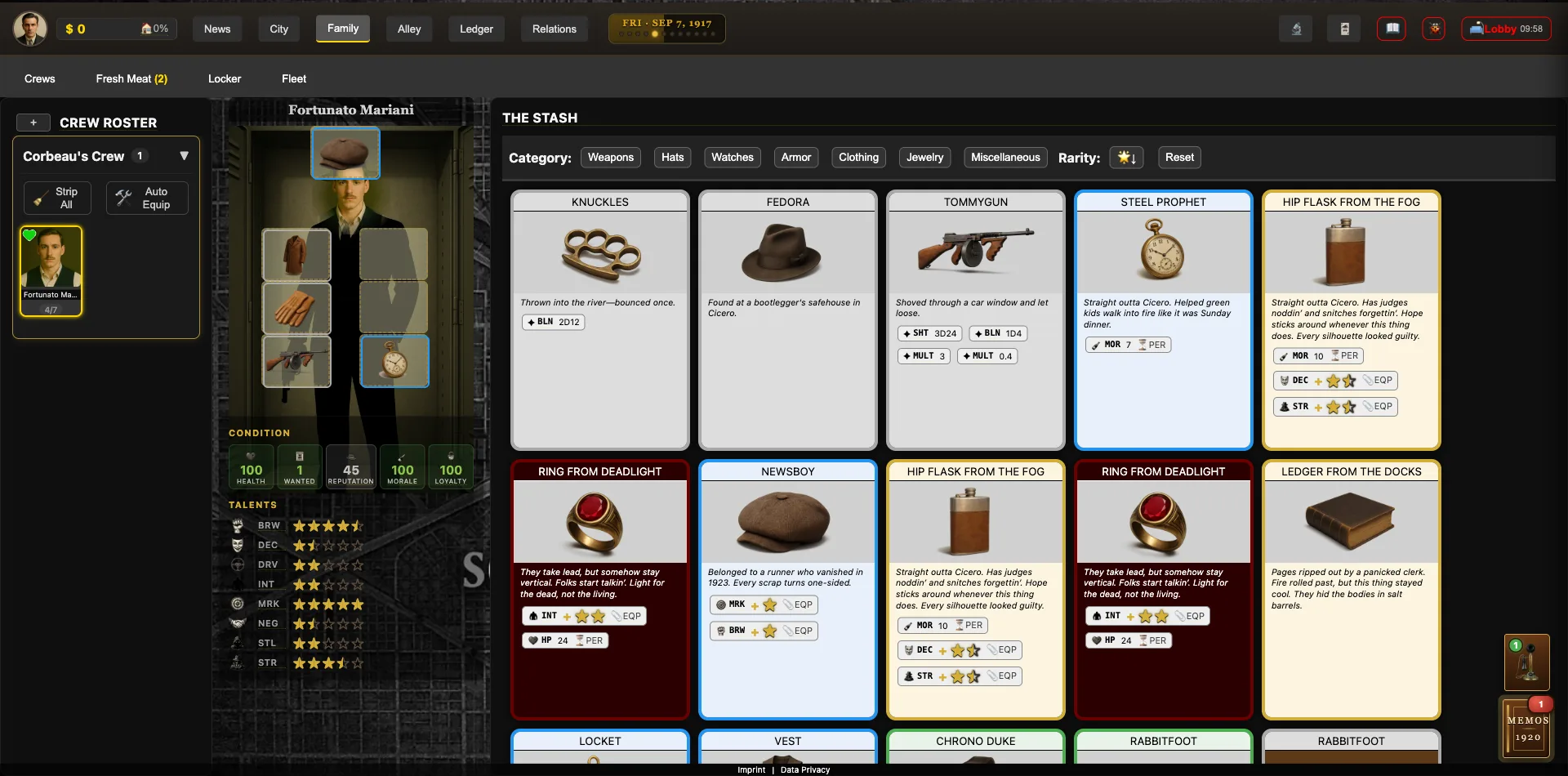
Every weapon, hat, watch and charm you pull off a body or buy off the street lands in the stash. Equip it on the gangster who needs it — each piece bends the stats that decide who walks away from the next fight.
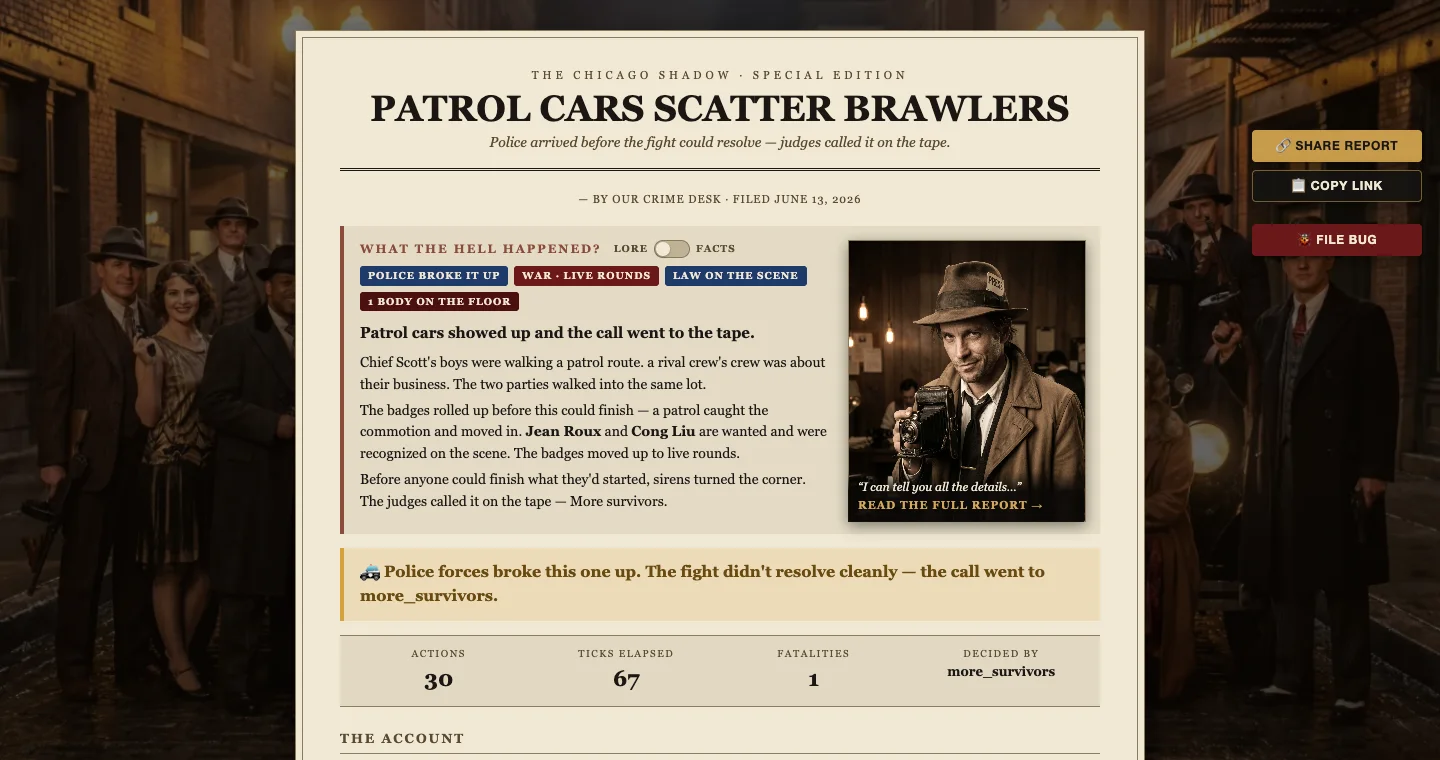
When crews clash, the city desk writes it up — a 1920s newspaper with the headline, who-shot-who, the body count, and a plain-language read on what actually went down. Share the link and let the whole city read it.
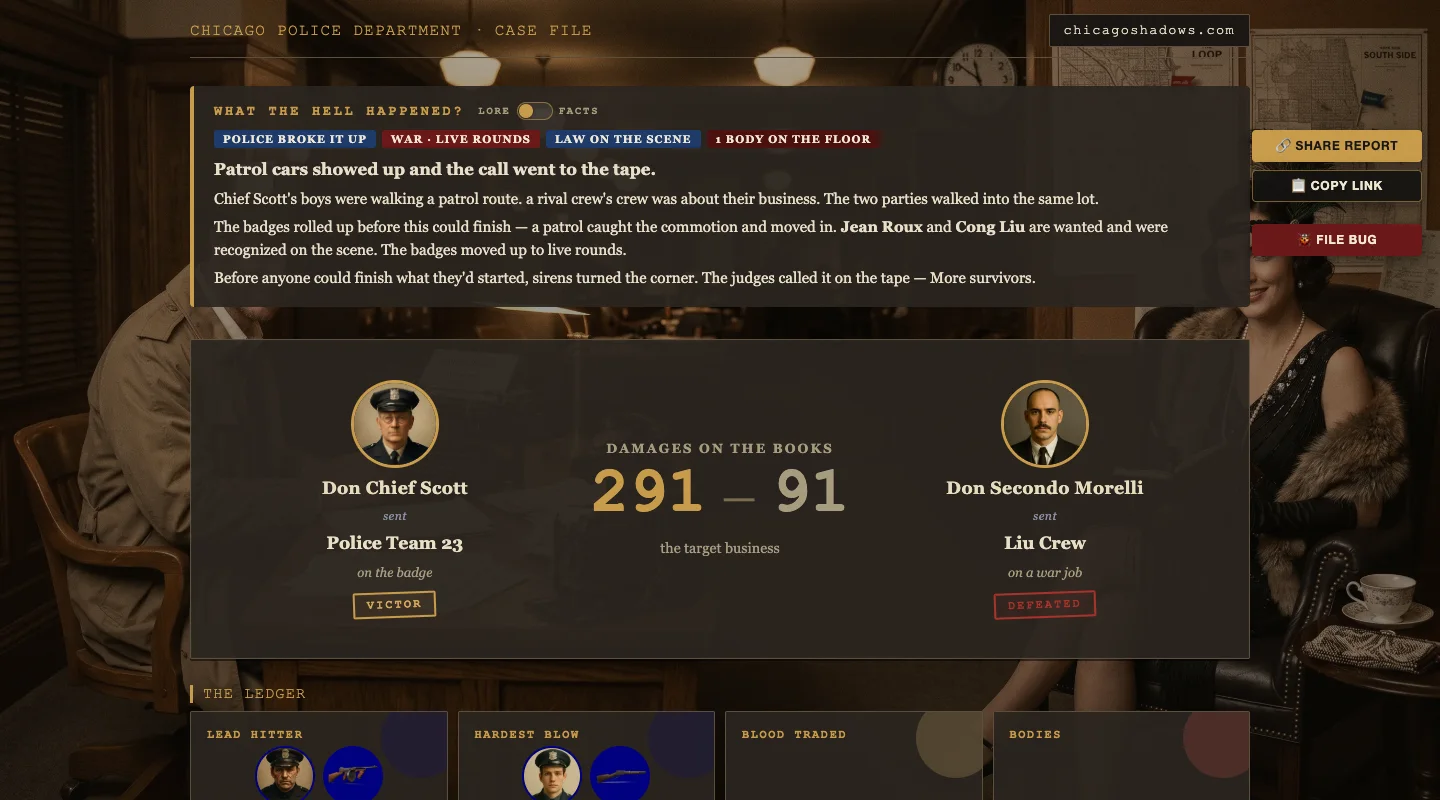
Want the receipts? The CPD case file lays the fight out boss against boss — a damage scoreboard, the hardest blow, the blood price, and every fighter on both crews with how they walked away (or didn't).
A continuous world is never finished. Here's what's in development and what's planned next.
Capos get defined turf so weekly collections, patrols, and local errands default to their area - cutting micromanagement and keeping your empire humm…
PlannedThe booze business comes alive. Build hidden stills, breweries, or distilleries to produce moonshine, beer, or whiskey. Store it in your warehouse. S…
ShippedFirst released in the game's round-based era — since adapted for the new continuous city. The current Alley Market logic creates a fairness issue: A…
ShippedFirst released in the game's round-based era — since adapted for the new continuous city. Players now get early warnings when their cash reserves ca…
PlannedA new city landmark gives crews a discreet way into the press business. Players can sway public opinion, commission “favorable coverage,” or leak mac…
ShippedFirst released in the game's round-based era — since adapted for the new continuous city. In the shadows of 1920s Chicago, a robbery is no longer wh…
The clock is already running. Every block you don't take, someone else does.
Why a waiting list? See how the play-test works →